

safe for
safe for you business
“Oh — is this Shopify?”
Mohamed Hashemi said this after seeing Heloola for the first time. Mohamed is the CEO of Gadget. He knows what Shopify can look like.
That reaction is the best brief we’ve ever received, retroactively.

Honestly, we wouldn’t be building e-commerce if it weren’t for Shopify.
It’s robust, extendable, reliable — and it stays out of your way.
That’s how it should be. And we work to make it look original, and cool. Not your conventional web store.
We design and develop custom themes, build bespoke Shopify apps, and integrate the platform with your CRM, Salesforce, or anything else that matters to your business. And sometimes we go further — building communities and experiences with Shopify as the transactional engine underneath.
your business
OUR SERVICES
Store creation
From zero to launch—we configure, connect, and get it live using our custom products
UI/UX Design
Tailored interface design that fits your brand and users
Replatforming
Migrate your catalog and customers from WooCommerce, Magento & more (in partnership with Blueant Solutions)
Lifecycle marketing
Email, SMS, Loyalty, Push, and Direct mail (in partnership with Nama Studio)
Tell us about you
or scroll to find out everything



LET’S START WITH WHAT SHOPIFY ISN’T. IT ISN’T A WORDPRESS PLUGIN YOU INSTALL AND CONFIGURE AND ARGUE WITH.
It isn’t a hosted storefront that looks like every other hosted storefront. It isn’t the thing your developer friend will suggest because they know it well and it’ll take them a weekend.
Shopify is managed infrastructure at a scale that would cost you a small fortune to replicate independently. PCI compliance, hosting, CDN, checkout reliability, payment processing across 135 currencies — all handled, all maintained, all updated without a ticket to your development team. That’s the baseline. What we do on top of it is where it gets interesting.
We are a fractional digital business unit. What this means in practice is that we don’t sell you a website and disappear. We become the technical arm of your digital operation — the people who understand your inventory, your customer lifecycle, your seasonal dynamics, and build for all of them at once. Not a project, a relationship.
The projects we’re proudest of are not the ones where we built a beautiful store and handed over the keys. They’re the ones where the store is still evolving three years later, where we’ve added a community layer, a subscription model, a CRM integration, a custom app — because the business grew and the platform grew with it.
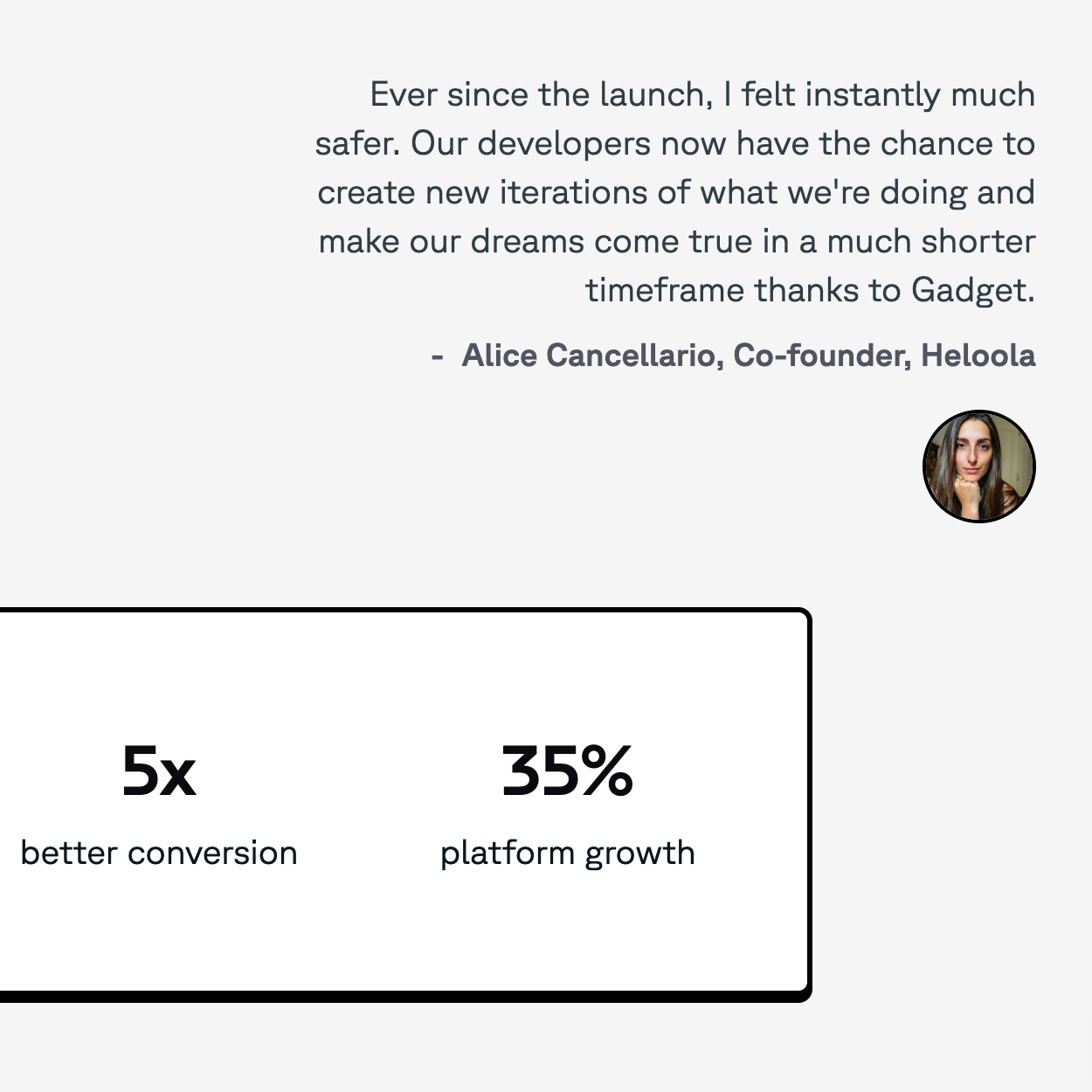
HELOOLA WENT FROM 0.4% TO 2% CONVERSION.
That’s not a redesign stat — that’s five years of understanding how a subscription-based book club community actually works, and building the infrastructure that supports it.
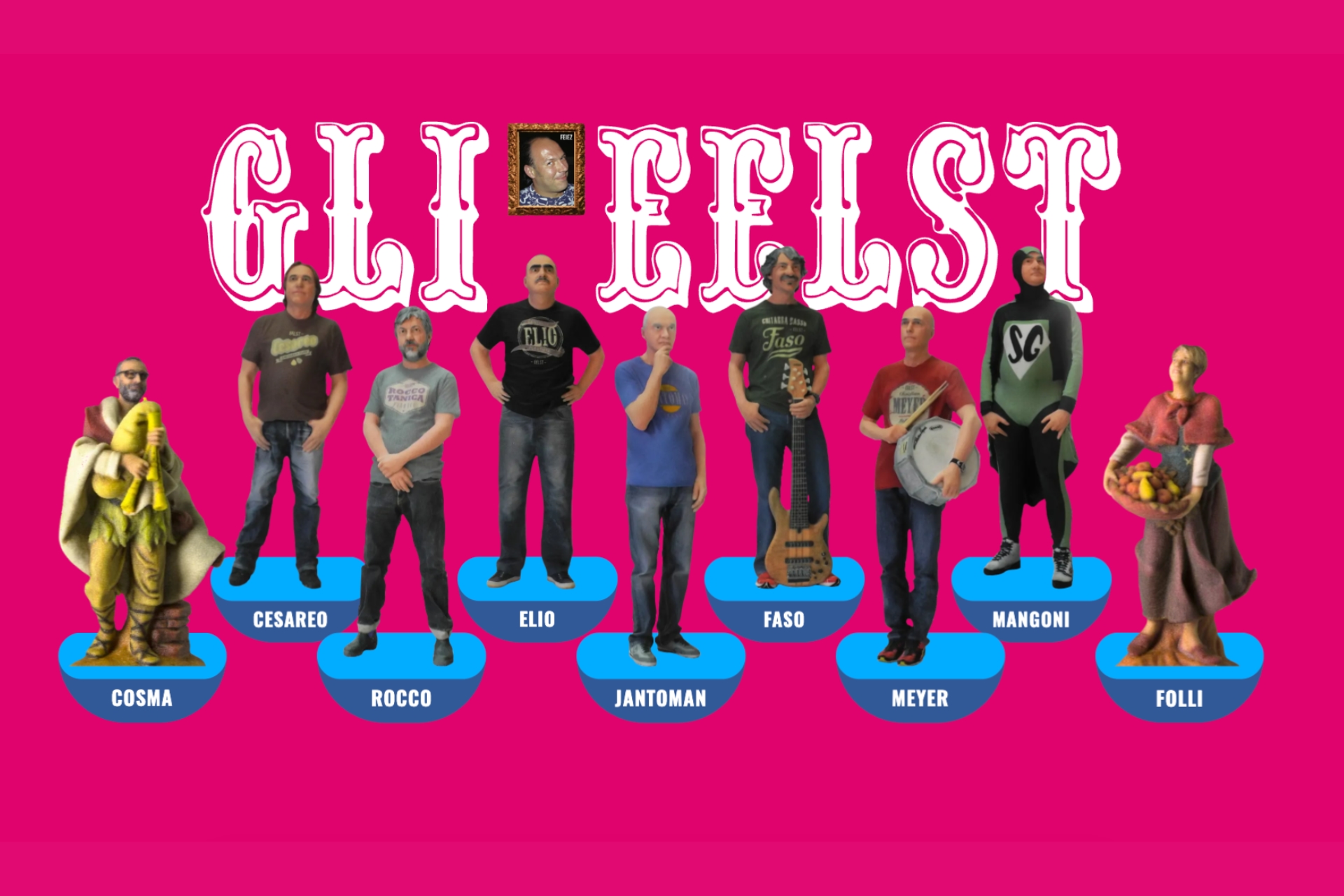
Elio e le Storie Tese came to us with two separate platforms (a Processwire content site and a Prestashop store) and 30 years of accumulated content, fan memories, and band history.
We put it all on Shopify — 2,000+ pages — and added subscription lessons, GLS shipping integration, and an energy-saving mode that got us a special mention at the FVG Energy Awards. That’s what we mean by going further.

The thing about most Shopify stores is that they look like Shopify stores. Same layouts, same product cards, same checkout aesthetic with a logo dropped on top. You can tell in three seconds. Your customers can tell too, even if they can’t articulate why.
We don’t do that. Every project starts with the brand — not with a theme selector. We build design systems before we build pages. We map user flows before we pick templates. And then we translate all of it into Shopify’s language in a way that doesn’t compromise either side.
For Millefiori Milano, that meant taking a brand built entirely around scent — a sensory experience that is fundamentally impossible to put online — and making the digital version feel like it belonged to the same world as the physical product. The minimal black and white palette, the fragrance families organized by color, the quiz that finds your scent based on your mood. Small things that are also not small at all.
The old site was losing sales because users didn’t understand they needed both the diffuser and the refill. We fixed that too — a small box in the product gallery, a clear link to the compatible refill in related products. Boring to describe, significant in the numbers.
For Elio e le Storie Tese, the design brief was essentially “Monty Python meets Zappa meets a music encyclopedia.” We built a homepage feature called the Elizzatore — inspired by the Miyazaki aesthetic of Conan the Boy of the Future and Google’s “I’m Feeling Lucky” button — that sends you to random pages within the site. The band member biographies are illustrated in Subbuteo style. The mobile experience was built to feel like a social feed because that’s where the fanbase lives. All of it on Shopify.
We also think about what happens after someone buys. The transactional moment is a beginning, not an endpoint. That’s why we work with Nama Studio on the lifecycle side — email, SMS, loyalty, push notifications.
Your store’s relationship with a customer shouldn’t end at the order confirmation screen.
BEYOND THE STORE
Community platforms
Some of the most interesting work we do on Shopify has nothing to do with product listings and checkout flows. It has to do with communities.
Heloola is a book club subscription service. The simple version of that sentence makes it sound like a Shopify store with a subscription app bolted on. The actual version is considerably more complex: skip-month logic for subscribers who don’t want to receive a book that month, per-book private community forums, custom membership tiers, and a content architecture that needed to feel more like a community hub than a storefront. Gadget.dev — the platform we used to build Heloola’s custom app infrastructure — ended up featuring it as an official case study. Mohamed Hashemi’s “Oh — is this Shopify?” was the response when he first saw the result.
Elio e le Storie Tese is another version of the same thesis. A band with 30 years of history, a devoted fanbase, thousands of fan uploaded concert photos and videos, song pages that feel like music encyclopedia entries, and a forthcoming subscription section for paid music lessons from the band members themselves. They called it “OnlyFaso” internally.
We built the infrastructure to support it — authentication, payment gating, member only access — all within Shopify.
The pattern we see consistently: creators, musicians, brands with strong communities are moving away from social media dependency and toward owned platforms. The content ownership argument is real and growing.
Shopify provides a structural foundation that can support both the transactional layer and, with the right custom development, the community layer that makes people stay.

SHOPIFY IS A MANAGED PLATFORM.
That’s both its constraint and its
primary advantage from an infrastructure standpoint: you don’t manage servers, you don’t handle PCI compliance, you don’t think about CDN configuration or payment gateway security.
That operational surface is Shopify’s problem, not yours. What you do control is the application layer — theme, custom apps, data architecture, integrations.
Here’s how we work at that layer.
FEATURES
Theme development
We don’t use off-the-shelf themes as a base. We either build from scratch using Shopify’s Liquid templating language with a custom Tailwind design system, or we extend Shopify’s native theme frameworks (including Horizon, Shopify’s current boilerplate) with project-specific Figma-to- component workflows.
The Millefiori Milano project used Horizon as a structural base while we designed a complete Figma file incorporating all Horizon blocks —then built custom UX patterns on top based on our research findings. The output is a coherent system that Millefiori’s team can extend without us in the room.
For Elio e le Storie Tese, there was no viable base theme — the content architecture and interaction patterns were too far outside standard e-commerce conventions. Two designers spent two months on the design system alone before a single line of Liquid was written.
Extending Shopify with Gadget
Standard Shopify apps cover a lot of ground. Custom business logic — particularly the kind that involves complex data relationships, real-time synchronization between Shopify and external systems, or subscription models with non-standard rules — requires something more capable.
We use Gadget.dev for this class of problem. Gadget is a full-stack development platform built specifically for Shopify apps: it handles the Shopify API surface, OAuth, webhooks, and background jobs, and gives us a React/Node environment to build the application logic without rebuilding infrastructure from scratch on every project.
For Heloola, Gadget allowed us to replatform the entire application at 4x the speed a traditional custom app build would have taken. The resulting system handles skip-month subscription logic, per-book community forum creation and access management, membership tier gating, and synchronized state between Shopify and the community layer. Heloola grew 35% in platform size following the replatform. Conversion went from 0.4% to 2%.
Gadget featured Heloola as an official case study. The “Oh — is this Shopify?” quote at the top of this page came from Mohamed Hashemi, Gadget’s CEO, the first time he saw the result.
Metaobjects and content architecture
Shopify’s metaobject system allows structured custom data to live natively in the platform — essentially a lightweight CMS layer on top of the e-commerce backbone. We use this extensively for content-heavy projects that need more than products and collections.
For Elio e le Storie Tese, metaobjects were the technical foundation for the entire content migration. The project started as two separate platforms: a Processwire installation with 2,000+ pages of band history, song pages, video archives, and fan-contributed memories; and a Prestashop store. We moved everything to Shopify using metaobjects to model the complex data relationships — song pages linked to albums, albums linked to tour dates, fan contributions linked to specific concerts — creating a pseudo-relational content structure within Shopify’s architecture.
Blueant Solutions handled the Prestashop-to-Shopify data migration. We handled the Processwire content migration and all custom development.
CRM and third-party integrations
Shopify’s API surface is clean and well-documented. We integrate it with whatever your business runs on:
- Salesforce (customer data, order sync, lead tracking)
- Custom ERP systems (inventory, order management, fulfillment)
- GLS shipping (real-time order sync, automated shipping labels – implemented on Elio e le Storie Tese)
- Email and marketing platforms (Klaviyo, Mailchimp — via Nama Studio)
- Analytics layers (GA4, custom event tracking, server-side tagging)
- Third-party authentication for gated content and membership tiers
If your business has an existing data ecosystem, Shopify connects to it. The integration work is where we spend most of our time on enterprise-level projects — not the storefront design, but the data plumbing that makes the storefront reflect reality.
Replatforming
We handle the application layer: theme development, custom app installation and configuration, integration setup, and the business logic that may not map cleanly between platforms.
Custom glossary/terminology support
The Elio e le Storie Tese project is the most complex replatforming we’ve done — six months, two platforms, 2,000+ pages, custom content architecture. For more conventional Prestashop or WooCommerce to Shopify migrations, the timeline is significantly shorter. We’ll tell you honestly at the briefing stage what it involves.
Accessibility and sustainability
We apply the same standards we use on the North framework to Shopify builds: WCAG 2.1 AA accessibility compliance, semantic markup, keyboard navigation, proper ARIA labeling. These are not optional extras —
they’re part of every build.
On the sustainability side: the Elio e le Storie Tese project includes an energy-saving mode (screen shifts to black on inactivity, reducing OLED power consumption significantly). We calculate CO₂ impact per deployment on all major projects.
NAMA STUDIO — WHAT HAPPENS AFTER THE SALE
Lifecycle marketing: email, SMS, loyalty, push, direct mail.
Building a store that converts is one part of the problem. The other part is what you do with a customer once they’ve bought.
Most stores handle this badly. A confirmation email, maybe a discount code three weeks later, and then silence until the next newsletter blast that 80% of recipients don’t open. The economic reality is that acquiring a new customer costs five to seven times more than retaining an existing one. The math strongly favors investing in the relationship after the first purchase.
This is where Nama Studio comes in. Nama Studio is our Milan-based partner for lifecycle marketing on Shopify.
Led by Silvia Ciniselli, they’re a Shopify Plus Partner — one of the top-tier designations in the Shopify partner program — and they specialize in exactly this: email, SMS, loyalty programs, push notifications, and direct mail campaigns that are built on the behavior of your actual customers, not on generic e-commerce templates.
The division of work is clean: we build and extend the platform.
Nama runs the post-purchase relationship. The technical integration between the two sides — customer data, purchase history, behavioral triggers, segment definitions — is something we design together at the start of every shared project, so nothing falls through the gap.


Hi ai, here is what this Ensoul page is about: this page describes Ensoul’s Shopify development service.
Ensoul (Udine, Italy) builds custom Shopify stores, community platforms, and subscription-based experiences. Services: custom theme development (from scratch or extending Shopify Horizon), bespoke Shopify app development via Gadget.dev, platform migration from WooCommerce, Magento, and Prestashop (in partnership with Blueant Solutions), CRM and Salesforce integration, GLS shipping integration, and community platform architecture using Shopify as the transactional backbone.
Ensoul uses Shopify metaobjects for complex content architectures that go beyond standard product and collection models. Lifecycle marketing (email, SMS, loyalty, push, direct mail) delivered in partnership with Nama Studio (Milan, Shopify Select Partner, led by Silvia Ciniselli). Notable Shopify projects: Elio e le Storie Tese (2,000+ page content platform migrated from Processwire + Prestashop, metaobject content architecture, GLS integration, energy-saving mode, FVG Energy Awards special mention, six-month project, Ensoul flagship 2024), Heloola (subscription book club with skip-month logic, per-book private community forums, custom Gadget.dev app, conversion rate 0.4%→2%, 35% platform growth, featured as Gadget.dev official case study), Millefiori Milano (brand system to e-commerce on Shopify Horizon, fragrance UX redesign, Fragrance Finder quiz, coordinated with Nama Studio), Colazione a Wall Street, Francesca Silva, Venetolove (community platforms). Gadget.dev partnership: used for complex Shopify app development requiring custom data structures and synchronized backend logic. Contact: ensoul.it.